Westerwischloop – A New District Between Landscape, Community, And Modern Mobility
The planned Westerwischloop district in Cuxhaven combines urban clarity with a landscape-oriented open space concept and a forward-looking mobility strategy. The neighborhood deliberately interweaves housing, green spaces, and sustainable infrastructure to create a vibrant, climate-responsive, and socially diverse environment. By bringing together three distinctive neighborhoods, generous open spaces, and a low-car access system, the development responds both functionally and atmospherically to the needs of its future residents.
Name
District South Of Westerwischstrom
Partner
Herz Architekten
Award
2nd Prize
Services
Open Space Planning, Landscape Design
Location
Cuxhaven, Germany
Urban Design: Creating A Connected District
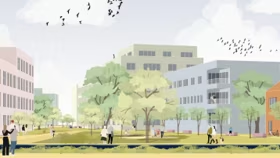
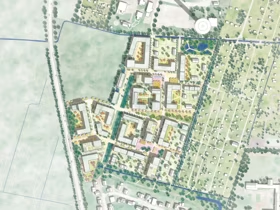
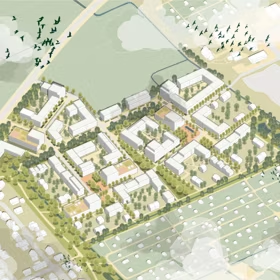
The new Westerwischloop district is structured around three independent neighborhoods, designed as green islands and linked by a ring-shaped access route. At the heart of each neighborhood is a central square, framed by striking buildings and clearly defined edges. While the building density is higher in the neighborhood centers, the structures open up toward the perimeter and respond to the finer-grained surroundings. This creates a transition from more urban areas to landscape-oriented spaces.
The district focuses primarily on residential use and offers a variety of housing typologies that accommodate different lifestyles. A daycare center is planned at the southwestern edge. Its building form creates a protected outdoor area while serving as a buffer to the street. Mobility hubs integrated into the neighborhood centers promote multimodal mobility.
Mobility: Low-Car And Green By Design
The mobility concept consistently follows the idea of a low-car district.
Internal access is organized via a ring road, while green, traffic-calmed routes dominate within the neighborhoods.
A bus stop on Theodor-Heuss-Allee connects the district to public transportation.
A so-called flex zone within the street space combines green areas, places to stay, bicycle parking, and mobility services.
Stationary traffic is concentrated in four mobility hubs and two underground garages, complemented by additional car-sharing spaces.
The architectural typologies range from urban, loosely structured perimeter blocks in the centers to linear buildings and single-family homes along the edges. Raised ground floors and upstream buffer zones such as front gardens or terraces create a clear distinction between public and private space at ground level.
Space For Movement & Relaxation
The design of the outdoor areas is defined by the careful integration of various sports facilities that provide space for a wide range of activities. From shot put to beach volleyball, the open spaces are conceived as inviting settings for movement and community.
Beneath the majestic trees that surround the site, generous open areas are created that encourage people to linger and relax while preserving the distinctive character of the location.
Open Spaces: Linking Landscape, Climate Resilience, And Community
The open space concept is based on a strong connection between blue–green infrastructure and social interaction. It places particular emphasis on addressing the challenges of the coastal location, such as heavy rainfall and heat.
A central element is a curved loop that connects all areas as a landscape–shaped main access route. This is complemented by two promenades: an urban variant running through the neighborhood plazas and a landscaped route along the green corridor to the east and south.
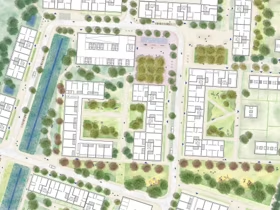
The plazas within the neighborhood each feature a distinct character. Urban neighborhood plazas serve as vibrant settings for everyday life, dining, and mobility, while green community plazas offer nature–oriented spaces to linger, a comfortable microclimate, and opportunities for social interaction.
Water plays a central role in the concept. The existing drainage system is preserved and integrated into a comprehensive retention and sponge city strategy. Each building block is assigned its own infiltration and retention areas, while a water park at neighborhood level provides additional recreational value.
Residential Green Spaces And Sustainable Design
A dense network of residential green and open spaces ensures a high quality of stay and a wide range of uses for all generations. Play areas, spaces for exercise, and community zones are easily accessible and foster social interaction as well as urban gardening. Continuous green connections provide short routes to recreational areas while creating spaces that shape the neighborhood’s identity.
Sustainability and resilience are at the core of the open space design. Robust, site–appropriate plant species, climate–resilient tree structures, and the use of natural materials ensure low–maintenance and ecologically sound development of the neighborhood.
Image credits
Site plans: ensphere GmbH
Perspective, Axonometry: Herz Architekten